
Cataract Surgery in Irvine, CA
Why Choose OC Eye Associates for Cataract Surgery?
At OC Eye Associates, our cataract surgeons, Dr. Daniel Kline and Dr. Todd Driver, bring exceptional skill, advanced technology, and personalized care to every cataract procedure. Our patients leave seeing better than they have in years, often with significantly reduced dependence on glasses.
- Board-certified cataract and refractive surgeons with a record of outstanding outcomes
- Laser-assisted cataract surgery using the Johnson & Johnson Catalys femtosecond laser for unmatched precision
- ORA intraoperative aberrometry for real-time lens power verification during surgery
- Full spectrum of premium IOL options, including trifocal (Alcon Panoptix Pro and Johnson & Johnson Odyssey), EDOF (Alcon Vivity), toric (Alcon Clareon and Johnson & Johnson Eyhance), and RxSight Light Adjustable Lenses
- Personalized lens selection tailored to your lifestyle, vision goals, and eye health
- Comprehensive pre- and post-operative care under one roof in Irvine, CA
Ready to take the first step? Schedule your cataract consultation today.

What Are Cataracts?
The eye’s natural lens sits about one-third of the way back inside the eye, just behind the iris and pupil. In a healthy eye, this lens is perfectly clear, allowing light to pass through and focus sharply on the retina. Over time, and sometimes sooner due to other eye conditions, systemic health conditions, or certain medications, this lens begins to cloud. That clouding is a cataract.
Because all light entering the eye must travel through this lens, even mild clouding can meaningfully affect the quality of your vision. Left untreated, cataracts can progress to the point of significant vision impairment. Cataracts remain the leading cause of blindness worldwide, but here in the United States, cataract surgery is one of the most successful and commonly performed procedures in medicine.
During surgery, the clouded natural lens is gently broken up and removed, then replaced with a clear artificial intraocular lens (IOL), restoring the path of light through your eye and, with it, the clarity of your vision. With today’s technology and premium lens options, many patients achieve better vision after surgery than they had even before the cataract developed.
Recognizing Cataract Symptoms
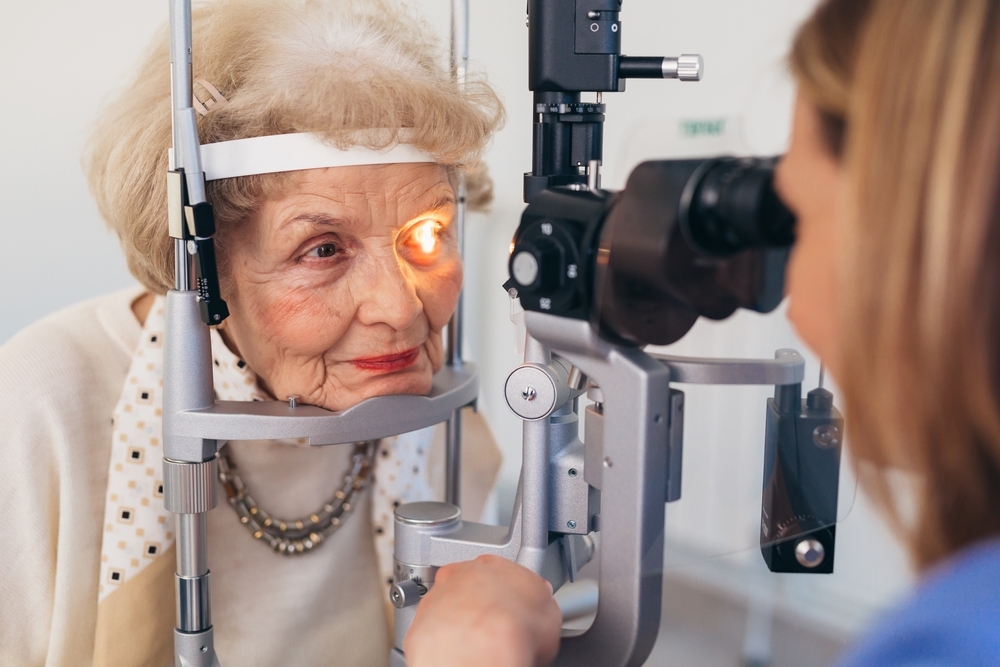
Cataracts typically develop gradually, which means many patients don’t notice the change until their vision has declined significantly. Common signs that a cataract may be affecting your vision include:
- Blurred or hazy vision that isn’t fully corrected by your glasses or contact lenses
- Glare and halos around headlights, streetlights, or oncoming traffic, particularly at night
- Increased sensitivity to bright light, even indoors
- Needing more light to read or perform close-up tasks comfortably
- Frequent changes to your glasses prescription as the cataract progresses
- Faded or yellowed colors, or difficulty distinguishing between similar shades
If any of these symptoms sound familiar, it may be time for a cataract evaluation at our Irvine office.
Advanced Laser Cataract Technology
At OC Eye Associates, we use the Johnson & Johnson Catalys femtosecond laser system, one of the most advanced platforms available for cataract surgery. Unlike traditional manual techniques, the Catalys laser allows our cataract surgeons to perform key surgical steps with computer-guided precision that simply isn’t achievable by hand alone.
The Catalys system uses 3D optical coherence tomography (OCT) imaging to map your eye in detail before a single incision is made. This allows for:
- Precise, reproducible incisions for optimal wound architecture and healing
- Accurate lens fragmentation, softening the cataract before removal and reducing the ultrasound energy needed during surgery
- Exact capsulotomy creation — the circular opening in the lens capsule that determines how your IOL is centered and positioned
- Arcuate corneal incisions for the correction of astigmatism at the time of surgery
Greater precision at every step means a safer procedure, a faster recovery, and the best possible foundation for your new lens implant.
ORA Intraoperative Aberrometry
In addition to the Catalys laser, OC Eye Associates uses the ORA System with VerifEye™ intraoperative aberrometry to further optimize your visual outcomes. ORA provides real-time measurements of your eye during surgery, giving Dr. Kline and Dr. Driver live data to verify and refine lens power and astigmatism correction while still in the operating room.
This technology is especially valuable for patients with prior LASIK or PRK, where pre-surgical lens calculations can be more challenging, and for patients receiving toric or premium IOLs where precise alignment is critical to the best possible result.
Intraocular Lens (IOL) Options at OC Eye Associates
Once your cataract is removed, an artificial intraocular lens (IOL) is implanted to restore clear vision. Choosing the right IOL is one of the most important decisions in your cataract journey. At OC Eye Associates, you have access to the full range of today’s most advanced lens technologies. Our cataract surgeons will work closely with you to match the ideal lens to your vision goals, lifestyle, and eye anatomy.
Standard Monofocal IOLs
Standard monofocal lenses are designed to provide excellent clarity at a single focal distance, typically for distance vision. Most patients who choose a standard IOL will still require reading glasses or bifocals for near tasks after surgery. These lenses are a reliable, time-tested option and are appropriate for many patients, particularly those with specific lifestyle needs or eye health considerations that make premium lenses less suitable.
Toric IOLs for Astigmatism
For patients with astigmatism, a standard monofocal IOL may leave residual blurring or distortion even after successful cataract removal. Toric IOLs such as the Alcon Clareon and Johnson & Johnson Eyhance are specially designed to neutralize astigmatism at the time of surgery, providing crisp, clear distance vision without the need for glasses to compensate for astigmatic error. At OC Eye Associates, we also use the Catalys laser’s arcuate incision capability with Cassini iris registration and ORA intraoperative guidance to further refine astigmatism correction for the best possible outcome.
Trifocal IOLs
Trifocal lenses like the Alcon Panoptix Pro and Johnson & Johnson Odyssey are designed to provide clear, functional vision at distance, intermediate (arm’s length), and near, dramatically reducing or eliminating the need for reading glasses and bifocals after cataract surgery. For patients who want maximum independence from glasses, trifocal lenses represent the most comprehensive solution available.
Extended Depth of Focus (EDOF) IOLs
Extended Depth of Focus (EDOF) lenses like the Alcon Vivity work differently from traditional multifocal lenses. Rather than creating multiple distinct focal points, EDOF lenses elongate the eye’s focal range, producing a smooth, continuous zone of clear vision from distance through intermediate, with reduced risk of the halos and glare that some patients experience with trifocal designs.
RxSight Light Adjustable Lens (LAL and LAL+)
The RxSight Light Adjustable Lens represents a fundamentally different approach to IOL selection and is one of the most exciting innovations in cataract care today. Unlike conventional IOLs, whose power is fixed at the time of implantation, the LAL and LAL+ can be fine-tuned after surgery using a proprietary UV light treatment delivered in-office.
This means that once your eye has healed and your vision has stabilized, your doctor can customize the lens power based on how your eye is actually seeing — allowing you to experience your vision and make adjustments before the prescription is permanently locked in.
The LAL+ builds on the original LAL platform with a modified aspheric surface designed to slightly extend the depth of focus, providing improved intermediate and near vision while maintaining excellent distance clarity.
The Light Adjustable Lens is particularly well suited for patients who have had prior refractive surgery (such as LASIK or PRK), where predicting the ideal IOL power can be more challenging. When combined with ORA intraoperative aberrometry, the LAL provides an unmatched level of precision in postoperative vision correction.

How Do You Know When It’s Time for Cataract Surgery?
Cataract surgery isn’t automatically recommended the moment a cataract is detected. In the early stages, updated glasses or brighter lighting may be enough to manage your symptoms comfortably. Surgery becomes the right conversation when cataracts begin to meaningfully affect your daily life — your ability to drive safely, read comfortably, work, or enjoy the activities you love.
There’s no universal threshold. The decision is personal, and Dr. Driver and Dr. Kline will help you weigh your options based on the degree of your cataract, your overall eye health, and your lifestyle goals. When you’re ready, the technology and expertise to restore your vision are here at OC Eye Associates.
Frequently Asked Questions About Cataract Surgery
How long does cataract surgery take?
The procedure itself typically takes about 10 to 15 minutes per eye. Including pre-operative preparation and post-operative observation, you can expect to be at the surgical center for approximately one to two hours.
Is cataract surgery painful?
No. Cataract surgery is performed under local anesthesia with light sedation. Most patients report feeling little to no discomfort during the procedure.
What is the recovery time after cataract surgery?
Most patients notice improved vision within the first few days. Full healing typically occurs over four to six weeks, though many patients return to most normal activities within a day or two. You’ll have several follow-up visits at our Irvine office to monitor your recovery.
Can both eyes be done at the same time?
In most cases, we perform cataract surgery on one eye at a time, typically scheduling the second eye one to two weeks after the first. This approach allows your first eye to begin healing and gives us the opportunity to evaluate results before proceeding with the second.
What is the difference between laser cataract surgery and traditional cataract surgery?
Traditional cataract surgery relies on handheld instruments and manual incisions. Laser-assisted cataract surgery with the Catalys femtosecond laser uses computer-guided imaging and a precision laser to perform key steps of the procedure, including the capsulotomy, lens fragmentation, and corneal incisions. The result is greater accuracy, reproducibility, and an optimized foundation for premium lens implants.
See Clearly Again
You don’t have to live with cloudy, blurry, or glare-affected vision. Cataract surgery at OC Eye Associates is a safe, proven procedure, and with today’s advanced laser technology and premium IOL options, many of our patients achieve the clearest vision of their adult lives.
Take the first step today. Call our Irvine office or request a consultation online to meet with Dr. Kline or Dr. Driver and find out which cataract treatment plan is right for you.